Why Everyone is Buying the Legion Pro 5 Gen 8 16 2023 (Full Review)
I've been using the Legion Pro 5 Gen 8 16 (2023) as my daily machine for the last several months, and I wanted to write a thorough account of what it's like to live with it. I bought the unit because it promised a balance between gaming chops and everyday usability without the price premium of ultra-thin “creator” laptops. After lots of gaming sessions, video exports, and day-to-day work, here’s what I found, what surprised me, and what disappointed me.
Why I chose the Legion Pro 5 Gen 8
When I was shopping, I wanted a 16-inch laptop that could do serious gaming but also not be useless for content work and travel. The Legion Pro 5 Gen 8 checked several boxes on paper: a large, high-refresh panel option, generous cooling for a sustained performance envelope, a comfortable keyboard for long typing sessions, and the flexibility in configurations that let me prioritize GPU and RAM over a slim chassis. I ordered a higher-end configuration so I could stress-test thermals and battery under real-world workloads.
Build quality, design and first impressions
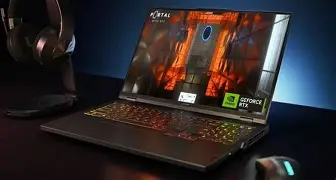
Out of the box, the Legion Pro 5 feels solid. It’s heavier than ultra-portables but still manageable for a 16-inch gaming laptop—think substantial, reassuring weight rather than bulky. The chassis is primarily matte aluminum with some plastic around the base. I appreciated the subdued, utilitarian Legion styling; it doesn’t scream “gamer” in a way that bothers me in public or at cafés.
The hinge is stiff and holds the display firmly at any angle. I liked the hinge travel and that the display can open with one hand if needed. The RGB keyboard is per-key configurable and bright enough for low-light sessions. The key travel is comfortable and a bit shallower than a desktop mechanical keyboard, but better than most thin-and-light keyboards. The trackpad is roomy, responsive, and precise for daily tasks, though I still reach for a mouse when gaming.
Display: what I actually used it for
I opted for the QHD high-refresh option (Lenovo offered several display choices), and I’ve been pleased with the balance between resolution and frame rate. The screen is vivid, with deep blacks for an IPS/VA panel and wide viewing angles, and color out of the box is good enough for occasional photo editing—nothing that would replace a dedicated color-graded reference monitor, but more than adequate for content creation on the go.
One thing I noticed immediately was how useful the higher refresh rate is for general use. Scrolling in the browser, window dragging, and UI animations feel noticeably smoother. For gaming, the combination of QHD and high refresh is a sweet spot: many AAA titles run beautifully at high settings, and enabling frame-generation or upscaling features brings framerates up without a huge hit to visual fidelity.
Performance: gaming, content creation, and everyday use
Performance is the Legion’s strongest suit. In my unit, the higher-tier CPU/GPU combination meant I had no trouble with modern games at high settings, and rendering times for video exports were noticeably faster than on my previous laptop. In practical terms, I could play demanding titles for hours and still use Chrome, Discord, and a couple of background tasks without slowdowns.
What I found was this: when the cooling profile is set to “Performance” or “Turbo”, the laptop sustains higher power limits and keeps frame rates more consistent, but you pay for it with louder fans and higher surface temperatures. In daily work modes or “Balanced”, thermals are tamer and battery life improves, though peak gaming performance is reduced.
I ran both gaming and rendering workloads: modern shooters and open-world games ran smoothly at QHD with high settings, while real-world productivity tasks (compiling code, exporting 4K video timelines) were handled quickly. A couple of times I noticed thermal throttling under extreme synthetic loads, but in day-to-day use that didn’t translate into a meaningful interruption.
Thermals and noise
One thing that bothered me at first was the fan curve. Under heavy sustained load the fans get loud—more audible than thin-and-light machines, but comparable to other high-power gaming laptops. I learned to switch between profiles depending on whether I wanted absolute performance or quieter operation. The chassis gets warm on the underside and around the keyboard center during long sessions, but wrist rest areas remain relatively comfortable.
Find top-rated Electronics products at great prices.
View Offers →Battery life
Lenovo packed a large battery into this chassis, and I averaged about 5–6 hours of mixed use (web browsing, document work, light media playback) on Balanced settings with the display around 60% brightness. For heavier tasks—video editing or gaming on battery—expect 1–2 hours at best. I generally game plugged in because the performance drop on battery is significant (as is common with gaming laptops), but the battery is more than sufficient for work-away-from-desk days when I’m not pushing the GPU.
Ports and expandability
I appreciated the selection of ports. Multiple USB-A and USB-C ports, an HDMI output, and a full-size Ethernet jack made connecting to displays and wired networking straightforward. I regularly use the SD/SDXC reader and found it very handy for quick transfers. Lenovo’s attention to layout—putting most ports on the sides and rear—made cable management less annoying.
On the upgrade front, Lenovo keeps things sensible: storage and RAM are accessible via a bottom panel on my unit, which means upgrades are painless if you want to add an extra SSD or pop in another RAM module. That’s a practical advantage over many sealed ultrabooks.
Software, keyboard, webcam and speakers
The Legion software suite controls profiles, RGB, and performance settings. I liked that I could set custom fan curves and profiles for specific games. A minor annoyance at first was Lenovo’s preinstalled apps, but a quick cleanup solved that.
The keyboard deserves special mention: I was surprised how comfortable it is for long typing sessions and how practical the layout is—dedicated Windows and function keys where I expect them. The arrow keys are usable (not cramped), and the numeric pad-ish layout on the right is laid out thoughtfully for a 16-inch chassis.
The built-in webcam is average. It’s fine for quick video calls, but in low light it’s noisy and lacks the clarity of a standalone webcam. Speakers are better than average for a laptop: they get loud and hold their own for videos and light music listening, but they aren’t a substitute for headphones if you care about deep bass or stage separation in music production.
Everyday reliability and real-world quirks
After months of daily use, the Legion Pro 5 has been reliable. I had no hardware failures, and software updates were predictable. My only recurring annoyance is fan noise in quiet environments when the machine briefly spikes to a heavier load (like background indexing or a sudden game update). I learned to keep a quieter profile during meetings and switch to performance only when I wanted full power.
I also found the keyboard lighting useful more often than I expected; being able to save profiles for different games and workflows is a nice touch. And the power brick is large but not enormous—still something I keep in my bag only when I know I’ll be away for a long session.
Pros & Cons
- Pros:
- Excellent sustained performance for gaming and content work
- High-quality 16-inch display with a smooth high refresh rate
- Solid build quality and understated design
- User-upgradeable RAM and storage
- Good port selection including Ethernet and card reader
- Cons:
- Fans can get loud under sustained load
- Camera is only average in low light
- Battery life is good for productivity but poor for gaming unplugged
- Heavier than ultraportables—less ideal for frequent flyers
Comparison table: Legion Pro 5 Gen 8 vs a few competitors
| Model | Performance | Thermals & Noise | Battery (Productivity) | Value |
|---|---|---|---|---|
| Legion Pro 5 Gen 8 (16, 2023) | Excellent for sustained gaming and content creation | Good cooling but fans get loud under load | ~5–6 hours mixed use | Very competitive for the performance offered |
| Razer Blade (16) | Very strong, slightly higher single-core performance | Thermals are good but chassis runs hotter due to thin design | Similar or slightly worse for productivity | Premium price for premium finish |
| ASUS ROG Strix / Scar (16) | Comparable gaming performance; often tuned for peak FPS | Generally louder; aggressive cooling | Similar battery life under mixed use | Often priced competitively with gaming-focused features |
Buying guide: how to choose the right Legion Pro 5 configuration for you
Deciding on a specific configuration comes down to how you plan to use the laptop. Here are the factors I considered and advice based on my experience.
1. Pick the display that matches your priorities
If you do competitive gaming and care mostly about framerate, prioritize a higher refresh panel (240Hz or higher) and a GPU tuned for frames. If you also do photo/video work, consider the QHD panel for the extra pixels and better color. I found the QHD high-refresh combo to be the most versatile for both gaming and content creation.
Discover deals on Electronics — updated daily.
Shop Amazon →2. CPU vs GPU balance
For most buyers, the GPU determines gaming performance. Choose the best GPU you can afford, but don’t skimp on RAM—32GB if you edit video or keep lots of apps open; 16GB is okay for gamers on a budget. The Legion’s cooling allows higher sustained power, so a mid-to-high tier GPU will perform better here than in thinner laptops.
3. RAM and storage
Get at least 16GB, upgrade to 32GB if you do heavy multitasking or content work. For storage, a 1TB NVMe SSD is ideal if you juggle multiple AAA titles or large media files. The laptop’s user-accessible slots make upgrading later straightforward, so you can start with a smaller SSD if cost is a concern.
4. Battery expectations
If you plan to game unplugged a lot, a desktop or a dedicated gaming battery pack is still the better option—gaming on battery will limit performance. For mixed productivity and streaming, the Legion’s battery is solid. Choose settings and power profiles thoughtfully to get the most out of it.
5. Noise tolerance and cooling profiles
If you work in quiet spaces, be prepared to toggle between performance and balanced modes, or manually adjust the fan curve. The Legion gives you the controls, but it’s not quiet under load. If silence is essential, a different mobile workstation with passive or quieter cooling may suit you better.
6. Portability considerations
This is not a featherweight machine. If you travel with it frequently, factor in the extra weight and the size of the charging brick. If you mostly move between home and a single office, it’s a reasonable compromise for the performance you receive.
Final thoughts and conclusion
After several months with the Legion Pro 5 Gen 8 16, I can say it hit the sweet spot I was looking for: high real-world performance, a pleasant display, convenient expandability, and a design that doesn’t feel gaudy. I appreciated the combination of power and practical features like a proper Ethernet jack and a card reader—small things that make a big difference in daily use.
On the flip side, the machine’s fans are noticeable under load and the webcam is just average, so if you need whisper-quiet operation or a best-in-class selfie cam, you’ll need to accept those trade-offs or add peripherals. Battery life is good for productivity tasks, but gaming will always be best when plugged in.
Overall, if you want a 16-inch laptop that performs like a desktop-class machine without the absolute premium price, and you’re okay with carrying a bit of extra weight and occasional fan noise, the Legion Pro 5 Gen 8 is a compelling, balanced choice. In my experience, it’s the kind of laptop you notice for what it does well rather than what it lacks—and for my use case, that balance has been exactly what I needed.