The Real Truth: Leica Q3 Monochrom or Sigma 12mm f/1.4 DC DN Contemporary?
In the expansive world of digital photography, comparisons often focus on similar tools within the same ecosystem. Photographers usually weigh one 35mm full-frame lens against another or decide between two flagship mirrorless bodies. However, a fascinating dilemma has emerged in niche enthusiast circles: the choice between a dedicated, high-end monochrome tool and a high-performance ultra-wide lens designed for crop-sensor systems. At first glance, the Leica Q3 Monochrom and the Sigma 12mm f/1.4 DC DN Contemporary appear to inhabit different universes. One is a luxury, fixed-lens full-frame camera that only sees in black and white; the other is an affordable, ultra-wide-angle prime lens for APS-C and Micro Four Thirds cameras. Yet, for a specific breed of street photographer, architectural enthusiast, and visual storyteller, these two items represent the peak of their respective philosophies.
The Leica Q3 Monochrom is the latest evolution of a bold experiment—a camera that strips away the Bayer color filter array to prioritize luminance, texture, and raw sharpness. It is a tool of restriction that yields ultimate freedom in the monochrome medium. On the other hand, the Sigma 12mm f/1.4 DC DN Contemporary represents the democratizing power of modern optics. It provides a massive field of view and a fast aperture to smaller sensor users, allowing them to capture expansive scenes with a level of depth and light-gathering previously reserved for expensive full-frame kits. Choosing between them isn't just about specs; it’s about deciding whether you want to master a specific aesthetic or gain a specific perspective.
The Leica Q3 Monochrom: The Purist’s Ultimate Weapon
The Leica Q3 Monochrom is not merely a digital camera with the saturation slider turned down to zero. By removing the color filter array, Leica has created a sensor where every single pixel is dedicated solely to capturing light intensity. This results in a level of micro-contrast and tonal gradation that color sensors simply cannot match. When viewing a file from the Q3 Monochrom, the first thing one notices is the "silky" nature of the shadows and the incredible recovery potential in the highlights. Because there is no interpolation of color data to create a luminance value, the images possess a structural integrity that looks more like medium-format film than traditional digital capture.
Under the hood, the 60-megapixel full-frame sensor provides enough resolution to utilize the "digital crop" features, effectively giving the user 35mm, 50mm, 75mm, and 90mm focal lengths while maintaining usable file sizes. The fixed Summilux 28mm f/1.7 ASPH lens is widely considered one of the finest optics ever produced for a compact system. It is sharp from corner to corner and features a dedicated macro mode that allows for intimate detail work. For the street photographer, the Q3 Monochrom offers a stealthy, tactile experience. The build quality is industrial-grade, featuring a weather-sealed body that feels like a solid block of magnesium. The addition of a tilt-screen in the Q3 generation has unlocked low-angle compositions that were previously difficult to achieve with the fixed-screen Q2.
Pros of the Leica Q3 Monochrom
- Unrivaled Tonal Range: The absence of a color filter allows for breathtaking greyscale transitions and deep, noise-free shadows.
- Extreme Low-Light Performance: Without the light-blocking filter, the sensor is inherently more sensitive, making ISO 12,500 look cleaner than most cameras at ISO 3,200.
- Legendary Summilux Optics: The 28mm f/1.7 lens is perfectly matched to the sensor, providing a signature "Leica Look" with high micro-contrast and smooth bokeh.
- Tactile User Experience: Physical dials for shutter speed and aperture, combined with a world-class electronic viewfinder, make the act of photography visceral and intentional.
- High Resolution: At 60 megapixels, you can crop significantly into the frame to simulate longer focal lengths without losing professional-grade detail.
Cons of the Leica Q3 Monochrom
- Permanent Commitment: You cannot "turn on" color. If you see a sunset that demands gold and purple hues, you are restricted to how those colors translate into grey values.
- Prohibitive Cost: It is an investment that costs as much as a used car, placing it out of reach for many hobbyists.
- Fixed Focal Length: While you can crop, you are physically stuck with a 28mm perspective, which may not be wide enough for certain architectural or landscape applications.
- Operational Quirks: Despite improvements, the software and battery life still trail behind the mass-market Japanese giants like Sony or Canon.
The Sigma 12mm f/1.4 DC DN Contemporary: Wide-Angle Mastery
If the Leica is about the purity of light, the Sigma 12mm f/1.4 DC DN Contemporary is about the drama of space. Designed primarily for APS-C systems (providing an 18mm equivalent field of view on full-frame), this lens fills a critical gap for crop-sensor photographers. For years, wide-angle lenses for APS-C were either slow-aperture zooms or mediocre primes. Sigma changed the narrative by introducing a fast f/1.4 aperture to a focal length that is notoriously difficult to engineer. This lens is a powerhouse for astrophotography, interior architecture, and environmental portraiture.
The "Contemporary" badge from Sigma often suggests a compromise between size and performance, but the 12mm f/1.4 feels more like their "Art" series in disguise. It features 17 elements in 12 groups, including multiple Special Low Dispersion (SLD) and "F" Low Dispersion (FLD) elements to combat chromatic aberration. The result is a lens that is remarkably sharp in the center even at f/1.4. For vloggers and content creators, the 12mm focal length is the "sweet spot"—it is wide enough to show the environment while holding the camera at arm's length, but not so wide that it creates the "fisheye" distortion associated with wider glass. The f/1.4 aperture allows for subject separation that is normally impossible in the wide-angle realm, creating a unique aesthetic where the background melts away despite the expansive view.
Pros of the Sigma 12mm f/1.4 DC DN Contemporary
- Exceptional Light Gathering: The f/1.4 aperture is a game-changer for night street photography and milky way shots on crop sensors.
- Spectacular Value: It provides professional-grade optical performance at a fraction of the cost of a full-frame wide-angle setup.
- Fast and Silent Autofocus: Using a stepping motor, the lens focuses quickly and quietly, which is essential for both video work and candid street shots.
- Expansive Perspective: The 18mm (equivalent) field of view allows photographers to capture tight interiors and massive landscapes that a 28mm lens cannot fit.
- Robust Build: It features a brass bayonet mount and basic weather sealing, making it a reliable companion for outdoor adventures.
Cons of the Sigma 12mm f/1.4 DC DN Contemporary
- Size and Weight: For a "Contemporary" lens on a small APS-C body, it is quite bulky and can make smaller cameras feel front-heavy.
- Sensor Limitations: Being a DC DN lens, you are limited by the dynamic range and noise floor of the APS-C sensor you attach it to.
- Edge Softness: While center sharpness is elite, the extreme corners can show some softness and vignetting when shot wide open at f/1.4.
- Distortion Management: Like all ultra-wides, it requires careful leveling to avoid "converging verticals" where buildings appear to fall backward.
Head-to-Head Comparison: Understanding the Use Cases
Comparing these two is an exercise in prioritizing different photographic values. The Leica user is often looking for a "one camera, one lens" solution that simplifies the workflow and forces a focus on composition and light. The Sigma user is looking for a specialized tool to expand the capabilities of their existing interchangeable lens system. Below is a look at how they compare in key categories.
Looking for the best Cameras & Photography deals on Amazon?
See Deals →| Feature | Leica Q3 Monochrom | Sigma 12mm f/1.4 DC DN |
|---|---|---|
| Sensor Type | Full-Frame (B&W Dedicated) | APS-C / MFT (Color Optimized) |
| Equivalent Focal Length | 28mm (Fixed) | 18mm (on APS-C) |
| Maximum Aperture | f/1.7 | f/1.4 |
| Resolution Potential | 60 Megapixels | Dependent on Camera Body |
| Primary Strength | Tonal Depth & Micro-contrast | Field of View & Versatility |
| Build Philosophy | Minimalist Luxury | Modern Utility |
Buying Guide: Which One Fits Your Vision?
Decining between these two requires an honest assessment of your artistic goals and your physical workflow. While the Leica is a complete system, the Sigma is a component of a larger kit. Here is how to decide based on common photographer profiles.
The Street Photographer
If you find yourself wandering the streets of Paris or New York at night, the Leica Q3 Monochrom is the holy grail. Its 28mm focal length is the de facto standard for street photography, providing enough context without the distortion of an ultra-wide. The ability to shoot at ISO 10,000 without visible noise allows you to capture life in the shadows. However, if you are a "street-vlogger" who needs to be in front of the camera while showing the city behind you, the Sigma 12mm on a Sony ZV-E10 or Fujifilm X-T5 is much more practical. The 18mm equivalent field of view ensures your face isn't filling the entire screen.
The Landscape and Architecture Enthusiast
For those who photograph grand cathedrals or mountain ranges, the Sigma 12mm is the clear winner. To put it simply, 28mm is often too narrow for tight city streets or expansive vistas. The 12mm (18mm equivalent) allows you to "breathe" into the scene. Furthermore, when shooting architecture, color is often a vital component of the story—the stained glass of a church or the blue hour sky. The Leica Q3 Monochrom's inability to capture these hues can be a significant drawback for this specific genre.

The Fine Art Portraitist
If your work centers on texture, skin detail, and mood, the Leica Q3 Monochrom is unparalleled. There is a "glow" to skin tones on a Monochrom sensor that color sensors can only approximate with heavy post-processing. The 28mm lens, while wide for traditional portraits, is excellent for "environmental" portraits where the subject is placed within their workspace or home. The Sigma 12mm at f/1.4 can create interesting, stylized portraits with massive background blur, but the perspective distortion will make facial features appear stretched if you get too close.
The Budget-Conscious Professional
There is no getting around the financial reality. A photographer can buy a top-tier APS-C camera, the Sigma 12mm, a 30mm f/1.4, and a 56mm f/1.4, and still have thousands of dollars left over compared to the price of a single Leica Q3 Monochrom. If you are building a business and need to cover a variety of focal lengths, the Sigma ecosystem is the "real truth" of smart investing. The Leica is a luxury purchase for those who have already established their style and want the absolute best tool for a specific, narrow way of seeing the world.
Real-World Performance: The Truth About the "Look"
Photographers often talk about the "Leica Look," but what does that actually mean when compared to modern Sigma glass? In the case of the Q3 Monochrom, it refers to the absence of digital artifacts. Traditional color sensors use a process called "demosaicing" to guess the color of each pixel based on its neighbors. This process inherently softens the image at a microscopic level. The Q3 Monochrom doesn't guess; it knows. This results in hair, fabric, and stone textures looking startly real. When you combine this with the Summilux lens, which stays sharp even at f/1.7, you get images that have a three-dimensional quality.
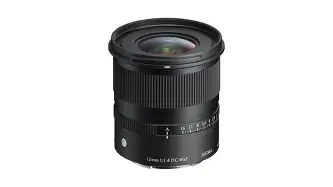
The Sigma 12mm f/1.4 offers a different kind of "look"—the look of high-end optical engineering. Sigma has mastered the art of making lenses that are "clinically" perfect. The 12mm has almost zero chromatic aberration (those annoying purple fringes around tree branches). It produces very clean, modern images with high saturation and contrast. While it may lack the "character" or the "imperfections" that some film-enthusiasts love, it provides a perfect raw file for the modern editor to manipulate. If you enjoy the post-production process, color grading, and creating vibrant digital art, the Sigma provides a more flexible starting point.
Looking for the best Cameras & Photography deals on Amazon?
Shop Amazon →The Impact of the Sensor: Full-Frame vs. APS-C
When comparing the Leica (Full-Frame) and the Sigma (designed for APS-C), we must discuss the "equivalence" factor. An f/1.4 lens on an APS-C sensor produces a depth of field similar to an f/2.0 lens on full-frame. This means the Leica’s f/1.7 lens actually provides a shallower depth of field and more "bokeh" than the Sigma at f/1.4, despite the Sigma's "faster" number. This is one of the most common misconceptions in the camera industry. By moving to the Leica Q3 Monochrom, you are gaining more subject separation and a larger sensor area that captures more light. The Sigma 12mm does a valiant job of narrowing this gap, but it cannot overcome the laws of physics regarding sensor size.
Integration into the Modern Workflow
In 2026, the speed of delivery is often as important as the quality of the image. The Leica Q3 Monochrom features robust Wi-Fi and Bluetooth connectivity via the Leica FOTOS app. Because the files are already in black and white, many photographers find they can transfer a DNG (RAW) file to their phone, apply a quick contrast adjustment, and publish high-end art within minutes. The workflow is streamlined by the limitation.
The Sigma 12mm requires a bit more intentionality. Because you are shooting in color on a high-resolution sensor, you often find yourself spending more time in Lightroom or Capture One, deciding whether the image should be color or black and white, correcting for the slight distortion of the 12mm focal length, and managing the color science of your specific camera brand. For the experimentalist, this is a joy. For the photographer who wants to get it right in the camera and move on, the Leica’s specialized nature is surprisingly efficient.
Conclusion
The "Real Truth" is that neither the Leica Q3 Monochrom nor the Sigma 12mm f/1.4 DC DN Contemporary is a "better" product in a vacuum. Instead, they represent two different peaks of the mountain. The Leica Q3 Monochrom is a statement of intent—a commitment to the elegance of light and shadow, stripped of the distractions of color and the complexity of multiple lenses. It is a tool for the photographer who wants to stop worrying about what gear to bring and start focusing on the frame. It is expensive, restrictive, and technically magnificent.
The Sigma 12mm f/1.4 DC DN Contemporary is a tool of empowerment. It takes the often-neglected APS-C format and gives it the professional wide-angle capabilities it deserves. It is for the explorer, the vlogger, and the astrophotographer who needs to capture the entire sky in a single frame. It offers incredible value and stellar performance, proving that you don't need to spend five figures to create world-class imagery. If your heart beats for the timelessness of a silver-halide-style digital print, save your pennies for the Leica. If you want to capture the world in all its wide, colorful, and dramatic glory, the Sigma is the smartest lens you can put in your bag.