Sony Fe 50 150Mm F2 Gm Specs, Features, and Value: Is it worth the price tag?
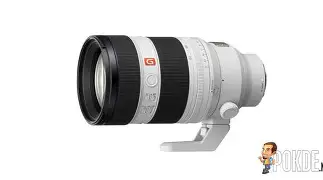
The landscape of professional optics is often defined by compromise. Photographers are frequently forced to choose between the versatility of a zoom lens and the luminous, shallow depth-of-field provided by a prime. For decades, the gold standard for versatility has been the 70-200mm f/2.8, a lens found in nearly every professional kit bag. However, Sony has recently disrupted this long-standing paradigm with the introduction of the Sony FE 50-150mm f/2 GM. By shifting the focal range slightly wider and, more importantly, widening the maximum aperture to a constant f/2, Sony has created a lens that challenges the necessity of several prime lenses while retaining the flexibility of a zoom.
This lens sits within the prestigious G Master (GM) line, a designation that signifies Sony’s highest aspirations in terms of optical resolution, bokeh quality, and build integrity. The FE 50-150mm f/2 GM is not merely an incremental update to existing technology but a specialized tool designed for event photographers, wedding shooters, and portrait specialists who require the gathering power of an f/2 aperture across a range of commonly used focal lengths. This article provides a comprehensive deep dive into the technical specifications, real-world performance, and overall value proposition of this ambitious optic to determine if its substantial price tag is a justifiable investment for the modern image-maker.
Technical Specifications and Optical Engineering
At the heart of the Sony FE 50-150mm f/2 GM is a complex optical formula designed to suppress aberrations that typically plague fast-aperture zoom lenses. Achieving a constant f/2 aperture throughout a zoom range requires massive glass elements and a sophisticated internal structure to manage light transmission and focus speed. Sony has utilized several of its proprietary lens technologies to meet these requirements.
The lens construction includes eXtreme Aspherical (XA) elements, which are manufactured with a surface precision of 0.01 microns. These elements are critical for eliminating "onion ring" bokeh and ensuring that the lens maintains corner-to-corner sharpness even when shot wide open. Combined with Super ED (Extra-low Dispersion) and ED glass elements, the lens effectively minimizes chromatic aberration and color fringing, which are common issues in high-contrast portrait settings. Furthermore, the application of Nano AR Coating II helps to suppress internal reflections, significantly reducing flare and ghosting when shooting into backlit environments—a common scenario for wedding and stage photographers.
The physical dimensions of the lens are a testament to the laws of physics. Because of the large front element required to support an f/2 aperture at 150mm, the lens is notably larger and heavier than a standard 70-200mm f/2.8. However, Sony has employed a magnesium alloy chassis to keep the weight as manageable as possible without sacrificing the ruggedness required for professional use. The lens is fully weather-sealed, with gaskets at all joints and a fluorine coating on the front element to repel water, oil, and fingerprints.
Key Features and Performance Analysis
While the f/2 aperture is the primary headline, the lens's performance is defined by its autofocus system and handling characteristics. Sony has equipped this lens with four XD (extreme dynamic) Linear Motors. This quad-motor system is necessary to move the heavy internal focus groups with the speed and precision required for high-speed burst shooting and real-time tracking on modern Alpha bodies like the A1 or A9 series. In practice, the autofocus is nearly silent and remarkably sticky, maintaining focus on a subject’s eye even as they move through a crowded environment.
One of the most significant features for video shooters is the minimized focus breathing. Historically, zoom lenses have struggled with changes in the effective focal length during focusing maneuvers, which can be distracting in cinematic productions. Sony has engineered the FE 50-150mm f/2 GM to keep the frame remarkably stable throughout the focus range. Additionally, the lens features a physical aperture ring that can be "de-clicked" for smooth exposure transitions during video recording, along with three customizable focus hold buttons that can be assigned to various camera functions.
Optical SteadyShot (OSS) is also integrated into the lens, providing multi-axis stabilization that works in tandem with the In-Body Image Stabilization (IBIS) found in Sony cameras. This is particularly vital given the f/2 aperture; while the fast glass allows for faster shutter speeds, the weight of the lens can still induce micro-jitters. The stabilization system ensures that even at 150mm, handheld shooters can achieve crisp results at relatively low shutter speeds.
Shop the latest Cameras & Photography picks on Amazon.
See Deals →Real-World Use Cases
The 50-150mm range is particularly interesting because it bridges the gap between environmental portraits and tight headshots. At 50mm, a photographer can capture a subject within their surroundings with a natural perspective. Zooming into 85mm or 100mm provides the classic portrait compression that professionals love, while the 150mm long end allows for intimate captures from a distance, such as during a wedding ceremony or a corporate keynote.
The f/2 aperture provides one stop more light than an f/2.8 zoom. This translates to half the ISO sensitivity, resulting in cleaner images in low-light venues like dark reception halls or indoor theaters. Furthermore, the f/2 aperture provides a shallower depth of field, allowing for greater subject separation and a creamy background blur that was previously only achievable with heavy prime lenses like an 85mm f/1.4 or a 135mm f/1.8.
Pros and Cons
- Pro: Exceptional Aperture - The constant f/2 aperture is a game-changer for zoom lenses, providing low-light performance and bokeh quality that rivals prime lenses.
- Pro: Versatile Focal Range - Covering 50mm to 150mm replaces the need to carry 50mm, 85mm, and 135mm primes in many scenarios.
- Pro: Advanced Autofocus - The quad XD Linear Motors provide lightning-fast, silent, and accurate tracking, even with fast-moving subjects.
- Pro: Build Quality - Professional-grade construction with extensive weather sealing and tactile controls makes it reliable in harsh conditions.
- Pro: Video Optimizations - Linear response manual focus and a de-clickable aperture ring make it a powerhouse for cinematographers.
- Con: Weight and Size - The lens is significantly heavier and bulkier than a standard f/2.8 zoom, which can lead to fatigue during long shooting days.
- Con: High Cost - The engineering required for f/2 across this range results in a price point that is prohibitive for enthusiasts and hobbyists.
- Con: Filter Size - Large front elements usually require expensive, large-diameter filters (often 82mm or larger), adding to the total cost of ownership.
Technical Comparison: Sony FE 50-150mm f/2 GM vs. Competition
To understand where this lens fits in the market, it is helpful to compare it against the lenses it is designed to potentially replace or compete with. The following table highlights the differences between the 50-150mm f/2 GM and the industry-standard 70-200mm f/2.8 GM OSS II, as well as high-end portrait primes.
| Specification | Sony 50-150mm f/2 GM | Sony 70-200mm f/2.8 GM II | Sony 135mm f/1.8 GM |
|---|---|---|---|
| Max Aperture | f/2 (Constant) | f/2.8 (Constant) | f/1.8 |
| Weight (Approx) | 1450g - 1600g | 1045g | 950g |
| Autofocus | 4x XD Linear Motors | 4x XD Linear Motors | 2x XD Linear Motors |
| Min Focus Distance | 0.6m - 0.8m | 0.4m - 0.82m | 0.7m |
| Primary Use | Events, Portraits, Video | Sports, Wildlife, Events | Extreme Shallow Depth Portraits |
Buying Guide: Is It Right For You?
Deciding whether to invest in the Sony FE 50-150mm f/2 GM requires an honest assessment of your shooting style, your physical stamina, and your business needs. This is not a lens for everyone; it is a specialist tool that serves a specific niche exceptionally well. Before making the purchase, consider the following factors.
1. Your Primary Subject Matter
If you are a wedding or event photographer who spends 85% of your time between 50mm and 135mm, this lens could revolutionize your workflow. It allows you to stay in the moment without needing to switch bodies or swap lenses to get that "prime look." However, if you primarily shoot sports or wildlife, the 50-150mm range may feel too short, and you might be better served by the 70-200mm f/2.8 or a 100-400mm lens for the extra reach.
2. Low Light Requirements
The difference between f/2 and f/2.8 is exactly one stop of light. In a controlled studio environment with strobes, this difference is negligible. However, in "available light" scenarios—such as dim reception halls, jazz clubs, or theatrical performances—that extra stop can be the difference between a usable image at ISO 3200 and a noisy one at ISO 6400. If you frequently find yourself pushing your sensor to its limits, the f/2 aperture is a massive advantage.
3. The "Two-Body" vs. "Single-Lens" Workflow
Many professional portrait photographers carry two camera bodies: one with a 35mm or 50mm lens and another with an 85mm or 135mm lens. The 50-150mm f/2 GM essentially consolidates that kit. While it is heavy, it may actually be lighter and less cumbersome than carrying two separate high-end setups. If you prefer the agility of a single camera system but refuse to compromise on the shallow-focus aesthetic, this lens is designed specifically for you.
Discover deals on Cameras & Photography — updated daily.
Shop Amazon →4. Ergonomics and Logistics
Potential buyers should physically handle the lens if possible. It is a substantial piece of glass that requires a sturdy tripod or a strong wrist for handheld work. Additionally, think about your current bag setup. This lens likely will not fit in smaller messenger bags designed for standard primes; it requires a professional-sized backpack or a large hard case for transport.
5. Financial Justification
For a hobbyist, the price of the 50-150mm f/2 GM is difficult to justify when excellent f/1.8 primes and f/2.8 zooms are available for significantly less. For a working professional, however, the math changes. If this lens replaces a 50mm GM, an 85mm GM, and a 135mm GM, the cost is actually lower than buying all three. Furthermore, the efficiency gained during time-sensitive events like weddings can lead to a higher volume of keepable images, ultimately supporting the return on investment.
Advanced User Considerations: Bokeh and Rendering
One of the more subjective aspects of the G Master line is the "look" of the images it produces. Sony engineers have focused heavily on the transition from the in-focus area to the out-of-focus background. With 11 circular aperture blades, the 50-150mm f/2 GM maintains soft, rounded bokeh even when stopped down slightly. The lens renders skin tones with the characteristic neutrality and clarity expected from Sony’s high-end glass, making it an excellent choice for fashion and commercial work.
While some vintage lenses or certain third-party options might offer more "character" or optical imperfections that some find charming, the G Master philosophy is one of clinical perfection. It is a lens designed to deliver maximum resolution for high-megapixel sensors like the 61-megapixel A7R V. If your work requires the ability to crop significantly or produce large-format prints, the resolving power of this lens is a critical feature that cheaper alternatives simply cannot match.
Conclusion
The Sony FE 50-150mm f/2 GM is a bold statement from a company that continues to push the boundaries of what is possible in optical design. It is a lens that refuses to accept the traditional boundaries between zoom versatility and prime performance. By providing a constant f/2 aperture across the most vital portrait focal lengths, it offers a unique solution for professionals who need to work quickly without sacrificing the aesthetic quality of their images.
Is it worth the price tag? For the generalist or the casual shooter, probably not. The weight and cost are significant barriers to entry when highly capable f/2.8 alternatives exist. However, for the high-end event photographer, the wedding specialist, and the professional videographer, the FE 50-150mm f/2 GM represents the pinnacle of modern lens technology. It is a specialized, high-performance instrument that can replace multiple lenses while providing a distinctive look that sets your work apart from the competition. In the hands of a professional who can leverage its unique capabilities, the value it provides in terms of speed, low-light performance, and creative flexibility far outweighs its substantial cost.