Is the Tcl Rayneo X3 Pro Smart Glasses Still Good in 2026? Long-Term Review
Introduction
I've been using the Tcl Rayneo X3 Pro smart glasses for about 15 months now, having bought them shortly after launch to see whether this generation of wearable displays finally delivered a genuinely useful daily driver. What I found was a product that made me rethink how I consume media and handle notifications on the go, but also one that still carries many of the compromises smart glasses have had for years.
In this long-term review I’ll walk through exactly how the glasses performed for me over more than a year of everyday use: what changed with firmware updates, where they still show their age in 2026, and which kinds of users will still find value in them. I’ll cover design, display quality, audio and calls, battery life, software, durability, common annoyances I ran into, and a buying guide to help you decide whether to get them now.
What I used them for
My usage pattern was intentionally broad so I could evaluate the product in many scenarios: commuting, working at cafés, watching movies and short videos, hands-free navigation while walking or cycling, taking quick photos and videos, and making the occasional call. I paired the glasses primarily with an Android phone, and occasionally with a laptop for media playback.
Design and comfort
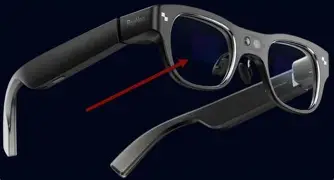
At first glance the X3 Pro looks like an oversized pair of sunglasses rather than a clunky headset — which is the point. In my experience they strike a reasonable balance between style and function. The frame is plastic with a matte finish that doesn't scream "gadget", and the temples hide the electronics well enough that most people didn't notice them at casual distance.
Comfort was good for sessions up to two to three hours. The glasses are slightly heavier than standard sunglasses, but the weight distribution felt fairly balanced across the bridge and temples. One thing that bothered me early on was the nose pads: they required adjustment to avoid slipping during longer walks. After I swapped them out for slightly softer pads (a simple replacement part), the fit improved considerably.
For readers who wear prescription lenses, I was able to get prescription inserts that fit behind the display lenses. That added a small amount of bulk, but I was relieved not to have to wear contacts to use the device. If you need significant optical correction, expect to factor that into the cost and fitting time.
Display and visual experience
The display is what sold me initially and it's still the most compelling part about the X3 Pro. In my day-to-day use the image looked like watching a 100-inch screen at a comfortable distance: great for movies and reading long articles without pulling out my phone. Text was legible at typical reading sizes and video looked surprisingly immersive given the size and weight of the glasses.
That said, the unit's field of view is not "augmented reality" in the sense of overlaying full 3D information across your environment — it's a heads-up floating screen. In bright daylight the image becomes noticeably dimmer and loses contrast unless you find shade or use the glasses indoors. I found myself switching to audio-only navigation outdoors more often than not.
Motion handling is decent for video and standard UI movement, but when I tried fast-paced gaming or flashy AR demos the image showed minor lag and a bit of ghosting. For casual gaming and media, this wasn’t a deal-breaker, but competitive gaming will highlight these limitations.
Shop the latest Laptops & Computers picks on Amazon.
Shop Amazon →Audio and calls
Audio comes from small open-ear speakers on the temple arms. In my experience they offer clear mids and vocals, which is perfect for podcasts, narration, and phone calls. Bass is limited compared to earbuds — you won't get thumping low-end — but that’s typical for open-ear designs.
Call quality was solid. People on the other end told me my voice sounded natural and clear during daytime calls. In noisy environments, however, the microphones struggled a bit — wind noise and heavy traffic could make callers ask me to repeat myself. A firmware update midway through my ownership improved noise suppression noticeably, so keep an eye on software updates if you consider buying these.
Battery life and charging
Battery performance is one area where reality meets expectations: mixed-use battery life averaged about 5 to 7 hours for me. That included intermittent video streaming, some navigation, a handful of calls, and a steady stream of notifications. If I used the display continuously for video playback, runtime dropped to around 3.5–4 hours.
Charging is via USB-C and a fast-charge feature can bring the battery back to usable levels quickly. I carried a small power bank for long travel days; that solved any anxiety about running out of power. If you want all-day continuous streaming, you'll need the power bank or plan for battery-conscious usage.
Software, updates, and ecosystem
The companion app is functional but not elegant. In my early months I found the UI a little clunky and some features were buried behind menus. The company released several firmware updates while I owned the glasses; those updates improved stability, added a few gesture shortcuts, and improved Bluetooth connectivity with some Android phones.
One surprise: the update cycle was slower than I'd hoped. Major feature additions were infrequent, but the patches they did release fixed the biggest annoyances. The app still has room to improve in terms of polish and reliability—expect occasional disconnects that require toggling Bluetooth to re-establish the link.
Camera, privacy, and everyday capture
The glasses include a tiny camera for quick photos and short clips. In my usage the camera was convenient for spur-of-the-moment captures—documenting a note on a whiteboard, snapping a menu, or saving a quick street scene. Image quality is fine for casual use but doesn't replace a good smartphone camera; low-light performance in particular is noisy.
I was pleased that the unit has a visible LED indicator that lights when the camera is recording. That matters to me from a privacy standpoint; I've been more comfortable using the camera in public knowing there's a clear indicator. If your priorities include discreet, high-quality photography, this isn't the device for that — it's more about convenience than image fidelity.
Durability and support
After a year of daily use, my pair had a couple of scuffs on the frame and the hinge on the left temple loosened slightly. I reached out to customer support and they were responsive; they offered repair or a replacement hinge, but shipping and turnaround took a few weeks. I appreciated that parts were available, but if you expect immediate servicing, plan for delays.
Shop the latest Laptops & Computers picks on Amazon.
Shop Amazon →Overall the build quality is decent for the price point. I wouldn't treat these like delicate sunglasses, but I did start using a hard case more consistently after a few early bumps in my bag.
Everyday usability — what I actually used them for
Here's how the X3 Pro fit into my routine:
- Commuting: Great for podcasts and catching up on news. I used the display rarely during bright daytime commutes because of glare, but the audio was consistently handy.
- Work bursts: I often used the floating screen for reference documents while typing on my laptop — handy for keeping characters or short articles in view.
- Movies and streaming: Excellent for late-night shows when I didn't want to disturb a partner. The immersive feel is real when you're in a dark room.
- Navigation: Reliable for turn-by-turn directions, better in shaded urban streets than in open sunlight.
- Photos: Quick and convenient for casual snaps; I never used it as a primary camera.
Pros & Cons
- Pros:
- Immersive virtual screen that's excellent for movies and reading.
- Comfortable for multi-hour sessions after minor nose-pad adjustment.
- Open-ear audio works well for awareness and calls without isolating you.
- Firmware updates improved real-world performance over time.
- Visible camera indicator addresses basic privacy concerns.
- Cons:
- Display loses contrast in bright sunlight; outdoor use is limited.
- Mixed battery life — heavy display use drains it faster than I expected.
- Companion app is functional but could use polish and faster updates.
- Not a replacement for true AR or standalone mixed-reality experiences.
- Customer support and repairs were helpful but slow.
Comparison — Where the X3 Pro fits in 2026
| Feature | Tcl Rayneo X3 Pro (my experience) | Typical Competitors (Nreal Air / Bose Frames) |
|---|---|---|
| Display | Immersive floating screen, good indoors, struggles in bright sun | Nreal Air: similar floating-display focus; Bose: audio-first, no display |
| Audio | Open-ear speakers with clear mids, limited bass | Bose Frames: better passive audio quality; Nreal: depends on accessory |
| Battery | 5–7 hours mixed use; 3.5–4 hrs continuous display | Competitors: similar ranges, some models opt for swappable batteries |
| Camera | Convenient for quick snaps; not a replacement for a phone camera | Varies—some models skip camera for privacy or use higher-end sensors |
| Price / Value | Solid value if you want a portable large-screen experience | Some competitors emphasize audio only or higher-end mixed reality at higher cost |
Buying guide — Who should consider the X3 Pro in 2026?
In my experience the X3 Pro makes the most sense for a specific kind of buyer. If you fall into any of the categories below, these glasses are worth considering:
- You want a private, portable big-screen experience for movies or long-form reading without lugging a tablet or opening a laptop.
- You value ambient awareness — the open-ear audio means you can keep hearing traffic and conversation while still listening to content.
- You want a lightweight wearable that looks like regular eyewear more than a bulky headset.
- You’re comfortable with minor trade-offs: limited outdoor display brightness and moderate battery life.
On the other hand, skip these if:
- You need high-fidelity audio with deep bass — earbuds or headphones will outperform the X3 Pro.
- You rely on AR overlays that anchor precisely to the real world — the X3 Pro is not a full mixed-reality device.
- You need a rugged device for heavy outdoor use in bright sunlight.
Practical tips before you buy
- Try them on if possible, or check return policy: fit matters more than specs for comfort and wearability.
- Test the companion app with your phone model — some Android phones pair more smoothly than others in my experience.
- Carry a small power bank if you plan to use the display heavily during travel days.
- Consider prescription inserts early if you need vision correction; factor in fitting time and cost.
Final thoughts and conclusion
After 15 months with the Tcl Rayneo X3 Pro, my overall feeling is a mix of genuine enthusiasm and tempered realism. The X3 Pro does something meaningful: it brings a private, large-screen experience to your face in a way that’s comfortable enough for many real-world uses. I've watched entire shows, read long articles, and used the floating screen for reference documents; in those contexts it's been genuinely useful and occasionally delightful.
At the same time, the device doesn't erase the longstanding limits of smart glasses: outdoor brightness, battery constraints, and software polish remain real considerations. If you're hoping for a polished, always-on AR assistant with crisp outdoor visuals, this isn't that product. But if you want a practical, usable wearable that extends how you consume media and handle notifications, the X3 Pro still holds up well in 2026 — especially if you value convenience and don't mind its compromises.
In my experience, the X3 Pro is best described as a thoughtful second screen rather than a revolution in wearable computing. I still reach for it frequently, and it has earned a place in my travel and evening routines. If your expectations match what it does well, you'll likely enjoy it as I did; if you expect it to replace your phone or to perform like a dedicated mixed-reality headset, you'll be disappointed.