Don't Buy the Odyssey Neo G8 S32Bg85 Until You Read This Full Analysis
Samsung's Odyssey Neo G8 S32Bg85 arrived with a clear mission: to bring desktop-class 4K performance and extreme refresh rates into a single, compact gaming monitor. For buyers who track specs — pixel density, refresh rate, HDR credentials, curvature and port selection — the Neo G8 looks like an ambitious piece of engineering. Yet real-world usage rarely maps perfectly to headline numbers, and the trade-offs embedded in any high-performance display can be decisive depending on how the product is intended to be used.
Introduction
This analysis examines the Odyssey Neo G8 S32Bg85 in practical terms: how it performs in different tasks, where it shines, and where expectations should be tempered. It focuses on the capabilities that matter to three common buyer groups: competitive gamers who prioritize low latency and frame rates, immersive gamers who value image quality and HDR, and content creators who require color accuracy. The goal is to provide an evidence-based, balanced assessment so a prospective buyer can decide whether this monitor aligns with their needs and hardware.
Product overview and key characteristics
The Odyssey Neo G8 positions itself as a high-end gaming monitor that combines a 32-inch 4K resolution with a very high refresh rate and advanced backlighting technology. In marketing materials the display is presented as an attempt to bridge the gap between ultra-fast esports panels and high-fidelity HDR displays. Several core attributes define its appeal:
- High pixel density: A 32-inch 4K panel provides a sharp desktop canvas suitable for detailed visuals, productivity with multiple windows, and crisp UI rendering.
- High refresh rate: The monitor targets significantly higher refresh rates than typical 4K monitors, aiming to deliver smoother motion for fast-paced gaming.
- Mini-LED backlighting: Advanced local dimming zones and mini-LED technology aim to improve contrast and HDR highlights versus traditional LED panels.
- Curvature and ergonomics: A curved format is intended to increase immersion, especially in single-player and sim-racing contexts.
- Connectivity: Modern high-bandwidth inputs are required to drive 4K at high refresh; the monitor provides native interface options aimed at both PC and console use.
Those headline features can be compelling, but buyers should understand how they interact. The combination of 4K and very high refresh rates places heavy demands on GPU hardware and on the interface used to connect the display.
Detailed analysis: performance in real-world use
Gaming: competitive and immersive scenarios
For competitive gamers, refresh rate and latency are the central concerns. Bringing a 4K panel to very high refresh rates is a technical achievement, but the practical payoff depends on the player’s hardware and game type.
In esports titles where frame rates commonly exceed 200 fps (in lower resolutions), a 4K 240Hz panel can be overkill because achieving such frame rates at native 4K is outside the reach of most GPUs. Many competitive players prefer lower resolutions (1440p or 1080p) to maximize frames-per-second and minimize input latency. However, for players with top-tier GPUs configured for maximum performance, the Neo G8's responsiveness at high refresh rates can be meaningful, especially in games that benefit from reduced motion blur and smoother camera pans.
For immersive single-player games and simulation titles, the Neo G8's high pixel density, HDR highlights and curvature combine to create a convincing sense of presence. Mini-LED local dimming can provide striking specular highlights and deeper perceived contrast, which benefits cinematic scenes, open-world landscapes and racing cockpit views. The curvature helps keep edges in peripheral view, which can be advantageous in flight and driving sims.
HDR and brightness behavior
One of the most significant upgrades over traditional LED-lit monitors is the use of mini-LED backlighting and a dense local dimming implementation. In practice this yields brighter highlights and better contrast in scenes with mixed bright and dark elements. It is important to note, however, that HDR performance is multi-dimensional: peak luminance, tone-mapping behavior, color volume and blooming control all interact.
Buyers seeking true cinematic HDR should evaluate tone-mapping and blooming on the unit they can test. Some users report impressive flare-like highlights on bright speculars, while others notice haloing around high-contrast objects if the local dimming is not perfectly tuned. In short, mini-LED substantially narrows the gap with higher-end TV-grade HDR, but it does not automatically equal the experience of a premium television with thousands of dimming zones.
Shop the latest Electronics picks on Amazon.
View Offers →Color accuracy and creative work
Content creators will appreciate the native resolution and dense pixel count, but a gaming-first panel often requires calibration for color-critical work. Out of the box, colors can be punchy and geared toward gaming. With a hardware calibration device and a proper workflow, the monitor is usable for photo and video editing, but professionals who demand absolute color fidelity and wide, accurate color gamut coverage might prefer a monitor calibrated and profiled specifically for creative work or a dedicated IPS workstation panel with proven factory calibration.
Ergonomics, build, and daily use
The Neo G8's stand typically offers height adjustment, tilt and at least some swivel. The curvature and relatively compact footprint for a 32-inch 4K display make it suitable for desktop setups where field of view is a priority. The monitor's on-screen display (OSD) and gaming-specific features (crosshairs, FPS counters, pre-set picture modes) demonstrate the product’s orientation toward gamers rather than office environments.
Noise, heat and power draw are also practical considerations. Monitors with powerful backlight systems and brighter panels tend to consume more power and produce more heat than their simpler counterparts. Buyers should consider placement and ventilation, especially when running prolonged high-brightness HDR content.
Pros & Cons
- Pros:
- Combines 4K resolution with a high refresh rate for a rare blend of sharpness and smooth motion.
- Mini-LED backlighting and local dimming deliver superior contrast and punchy HDR highlights compared with conventional LED monitors.
- Curved panel increases immersion in single-player and sim titles.
- Solid build quality and gamer-focused feature set in the on-screen menu.
- Suitable as a single-display productivity setup due to 4K pixel density.
- Cons:
- Extremely demanding on GPU hardware to achieve maximum refresh at native 4K in modern titles.
- HDR performance can vary by unit; local dimming halos or aggressive tone-mapping may appear in some scenes.
- Curvature is not preferred by everyone, particularly for multi-window productivity or linear design work.
- Premium price point compared with flat 4K or lower-refresh gaming monitors.
- Color accuracy out of the box may require calibration for professional creative work.
How the Odyssey Neo G8 compares to close alternatives
Comparison is useful for buyers weighing where to spend limited budget or deciding which trade-offs to accept.
| Feature | Odyssey Neo G8 S32Bg85 | Typical 32" 4K 144Hz Monitor | Ultrawide 49" High-Refresh Monitor |
|---|---|---|---|
| Resolution & size | 4K on 32" — high pixel density | 4K on 32" — similar sharpness | Dual QHD (5120x1440) on 49" — ultra-wide workspace |
| Refresh rate | Very high (marketing: up to extremely high Hz for 4K) | High (commonly 144Hz — easier to reach with GPU) | High refresh tailored to sim/immersive players — not native 4K |
| HDR | Mini-LED with local dimming — strong highlights | Edge-lit HDR or limited local dimming | Depends on model — often good for cinematic scenes |
| Competitive gaming | Excellent if GPU can sustain high fps at 4K | More accessible for esports with mid-range GPUs | Great for immersive sim racing; less for twitch FPS |
| Productivity/multi-window | Very usable due to 4K territory | Comparable | Superior horizontal workspace for timeline editing |
| Price | Premium | Mid-to-high | Premium for high-spec panels |
Buying guide: what to check before committing
Given the price and the specialized nature of the Neo G8, a buyer should run through several checks before purchase. The following checklist helps prospective owners decide whether the Neo G8 is the right investment.
1. Match the monitor to the GPU
Driving 4K at very high refresh rates is tremendously GPU-intensive. Buyers should confirm whether their PC’s GPU can realistically sustain high frame rates at 4K in the titles they play. For those primarily playing competitive FPS titles, a lower resolution or a different panel may provide more tangible gains. For single-player and simulation enthusiasts with top-tier GPUs, the Neo G8 can be a rewarding upgrade.
2. Check connection requirements and cables
To reach maximum refresh and color depth, certain interfaces and cable standards are necessary. Verify that the system has a compatible DisplayPort or HDMI implementation and that the monitor firmware supports the intended mode without compromise. Buying quality certified cables is advisable to prevent signal issues.
3. Evaluate HDR behavior in person
If possible, test a unit or examine detailed reviews that include HDR tone-mapping measurements and artifact observations. HDR experience can be subjective: some users prioritize bright highlights; others value uniformity and minimal blooming. If available, sample different panel modes and brightness levels.
Looking for the best Electronics deals on Amazon?
See Deals →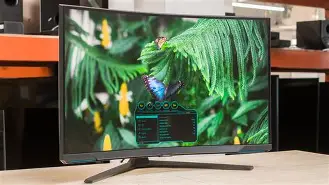
4. Consider curvature relative to workflow
The curved form factor enhances immersion but may not suit multi-monitor setups or tasks requiring perfectly straight horizontal lines. Architects, CAD users and some designers may prefer flat panels for accurate geometry work. Buyers who plan to game and enjoy cinematic content are more likely to benefit from the curve.
5. Factor in calibration needs
Out-of-box color performance may not meet creative professionals’ standards. Consider budget and time for a calibration device and color profiling if color-critical tasks are planned. Check whether the monitor supports hardware calibration or LUT loading in the OSD for better workflows.
6. Pay attention to ergonomics and desk fit
Measure desk depth and viewing distance to ensure the curvature and size are comfortable. A 32" curved monitor requires adequate space for the intended seating position; otherwise the curvature can distort window layouts or make desktop navigation awkward.
7. Compare total cost of ownership
High-end monitors often involve additional expenses: quality cables, calibration tools, and sometimes a more powerful GPU. Calculate the total cost against alternatives to decide whether the premium features justify the investment based on personal priorities.
Real-world scenarios and recommended buyer profiles
How well the Odyssey Neo G8 serves a buyer depends on the use case. The following profiles summarize typical outcomes.
- High-end gamer with a flagship GPU: This buyer is most likely to extract real value. For those who own the latest GPUs and play visually rich, frame-rate-scalable titles, the Neo G8 offers both visual fidelity and smoothness.
- Sim-racer or flight-sim enthusiast: The curvature, 32" footprint and HDR highlights make the display a strong candidate for immersive simulator setups, especially when used in single-monitor cockpit arrangements.
- Competitive esports player on a mid-range GPU: For this buyer, the monitor's high refresh is less practical; a 1440p high-refresh or 1080p ultrafast panel may improve competitive results more affordably.
- Creative professional: With calibration, the screen can function in a content-creation pipeline, but those who prioritize factory-certified color accuracy and uniformity might prefer purpose-built studio displays.
Conclusion
The Odyssey Neo G8 S32Bg85 is an ambitious product that aims to satisfy two historically divergent needs: the crispness and workspace of 4K, and the fluidity of high-refresh-rate gaming. For buyers with the hardware to back it up and a clear preference for immersive single-player or simulation experiences, it can be an outstanding monitor. Yet the combination of high resolution, high refresh and advanced HDR backlighting comes with trade-offs: cost, GPU requirements, potential HDR artifacts and ergonomic considerations tied to curvature.
Ultimately, the decision hinges on priorities. Those seeking measurable competitive advantages on mid-range hardware may find a better balance elsewhere. Conversely, buyers who value a visually rich, smooth experience and who are prepared to invest in the necessary GPU and calibration will find the Neo G8’s strengths compelling. Reading reviews that include hands-on HDR and latency measurements, testing a display in person where possible, and aligning purchase decisions with the buyer's actual usage patterns will lead to the most satisfactory outcome.